
Calling all Future Ivy League and Top U.S. University Students!
- Thu, 9 Jul 2026
- 12:30 – 13:15 HKT
- Online via Zoom
召集所有未來的常春藤盟校及美國頂尖大學學生!本次網上講座將拆解學生考獲 SAT 1580 分的真實成功案例與高效備考策略。歡迎預約。
- 2026 年 7 月 9 日(星期四)
- 12:30 – 13:15 HKT
- Zoom 會議




This is, of course, not a problem which is limited to a subject like A-level music. There are many subjects which are not regarded as mainstream, including modern foreign languages, where very small class size makes it a difficult subject to offer.
Perhaps the universities are also partly responsible for this. With the rising cost of university education, most students want to study a course which will lead to employment. A-level music is not always regarded as an academic option although it is often required to pursue music at tertiary level. Of course the problem with studying tertiary level music is it does not lead to a wide range of employment options.
I think students feel it is safer to study a subject at A-level (or its equivalent) which is more understood by admissions officers. Getting into a business or science course with one of your three options being A-level music might be possible but a lot of students may be concerned about how music will be perceived by those admissions officers.
If universities could place positive encouragement, in some way, on less common or popular subjects, students might feel more confident in including them in their A-level choices. But at present, music is often seen as an extra-curricular choice, rather than part of the mainstream curriculum.






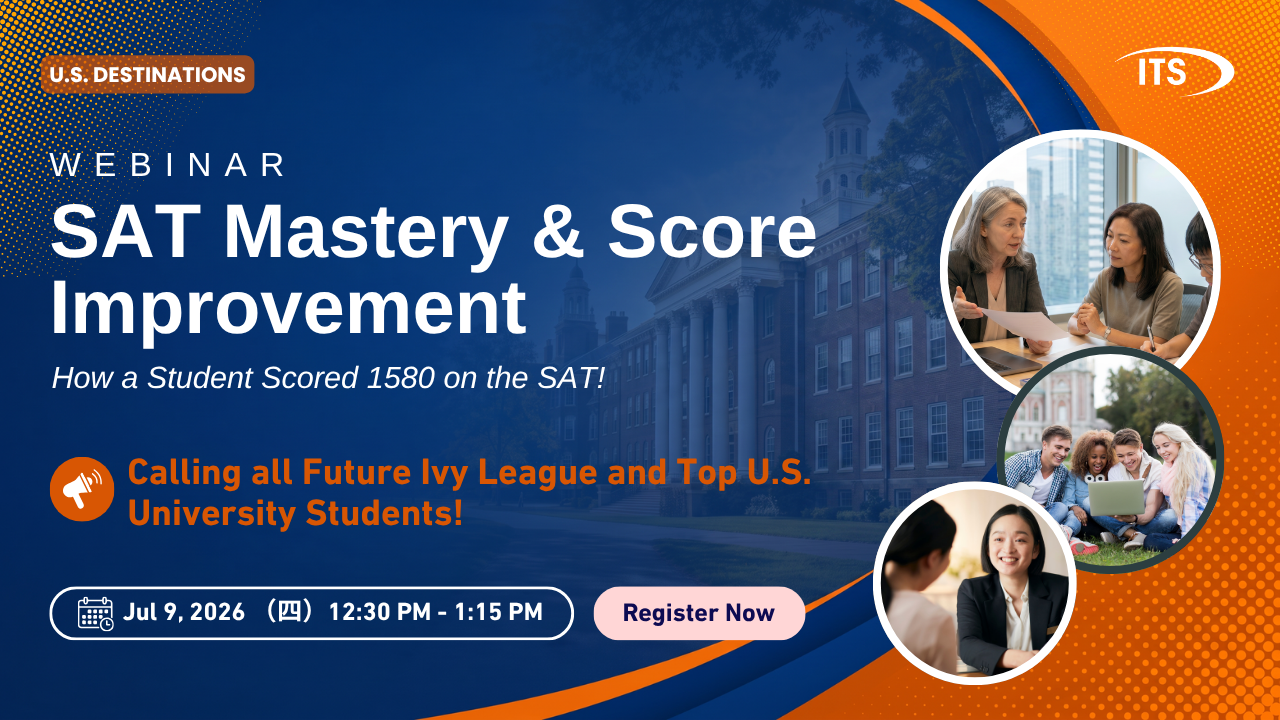
Calling all Future Ivy League and Top U.S. University Students!
召集所有未來的常春藤盟校及美國頂尖大學學生!本次網上講座將拆解學生考獲 SAT 1580 分的真實成功案例與高效備考策略。歡迎預約。