













Calling all IB students – don't miss this Free Introductory Session!
- Tue, 8 Sep 2026
- 17:00 – 18:00 HKT
- Online via Zoom
系列講座—— IBDP 高分指南:TOK 寫作深度拆解
- 2026年9月8日(星期二)
- 17:00 – 18:00 HKT
- Zoom 會議

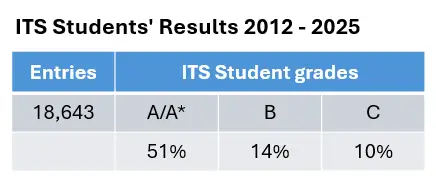
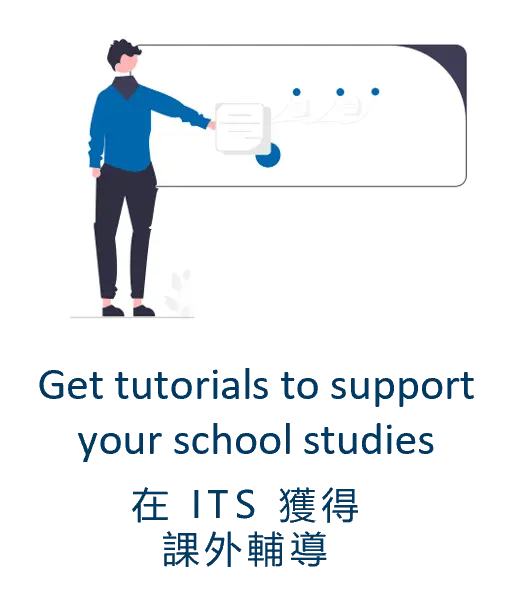
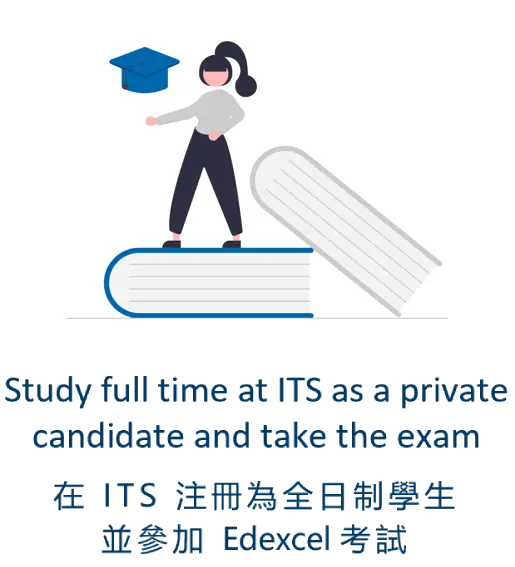
ITS Tutorial School has offered top A-level Chemistry support since 2005. We are the only tutorial school in Hong Kong also licensed to run the A-level exams by Pearson. You can take both International A-levels and some GCE subjects as well. Thousands of students have taken private tuition with our Chemistry tutors to date. You can either:


Choose another A-level subject:
accounting biology business chemistry chinese economics english language english literature geography history mathematics physics psychology spanish

This course aims to give you the skills to:
This qualification is 100% externally assessed by examination and has a modular structure, with three exam sessions each year in October, January and June (not all subjects are available in each exam session). A table of the course structure can be found at the bottom of the page.
First and foremost, to study an IAL in Chemistry you must have an interest in the natural world, an enquiring mind, and the ability to analyse data and results from experiments. You do not need to have completed a formal qualification in chemistry before, but previous study in chemistry in Chemistry is recommended. Skills in applying simple mathematical operations, such as logarithms and interpreting functions and graphs are required. Previous study of other natural sciences, especially physics and biology, is helpful but not necessary.
You can go on to university courses like an honours degrees in Chemistry, or go on to degrees like Chemical Engineering, Biology, Biochemistry, Zoology, Environmental Science or Medicine. An A-level in Chemistry also opens the doors to BTEC vocational qualifications in Applied Biology, Applied Chemistry, Pharmaceutical Science, or Healthcare Science.
The skills learned by studying Chemistry are relevant to many careers, like toxicology, forensic science, pharmacology, medicine, research science, environmental management, and analytical, synthetic, and physical chemistry.
For more information on specific university requirements related to A-levels, please see our A-levels FAQ page
For more information on applying to UK universities, see our UCAS page.
If you are an international student taking A-levels the basic offer is made for 3 A-level subjects. It is very important when choosing these subjects that you understand what options you will have for university when the time comes. ITS has a long-established, highly experienced counselling team who can help you make these decisions and plan your academic course. But to start with, try out this excellent tool from the Russel Group which helps you experiment with your subject choices. Then come and see us.
You can find the Edexcel course specification here.
The course consists of six units – three IAS and three IAL units. Units 1, 2, 4, and 5 are theoretical units. Unit 3 covers the practical, laboratory applications of material from Units 1 and 2 and Unit 6 contains practical material from Units 4 and 5.
Find our FAQ's for Edexcel International A-levels here.
IAL Chemistry topics at a glance
IAS Unit 1.
The Core Principles of Chemistry
IAS Unit 2. Application of Core Principles of Chemistry
IAS Unit 3. Chemistry Laboratory Skills I Alternative
IAL Unit 4. General Principles of Chemistry I – Rates, Equilibria, and Further Organic Chemistry
IAL Unit 5. General Principles of Chemistry II – Transition Metals and Organic Nitrogen Chemistry
IAL Unit 6. Chemistry Laboratory Skills II Alternative
Assessment
Assessment in January, May-June and October



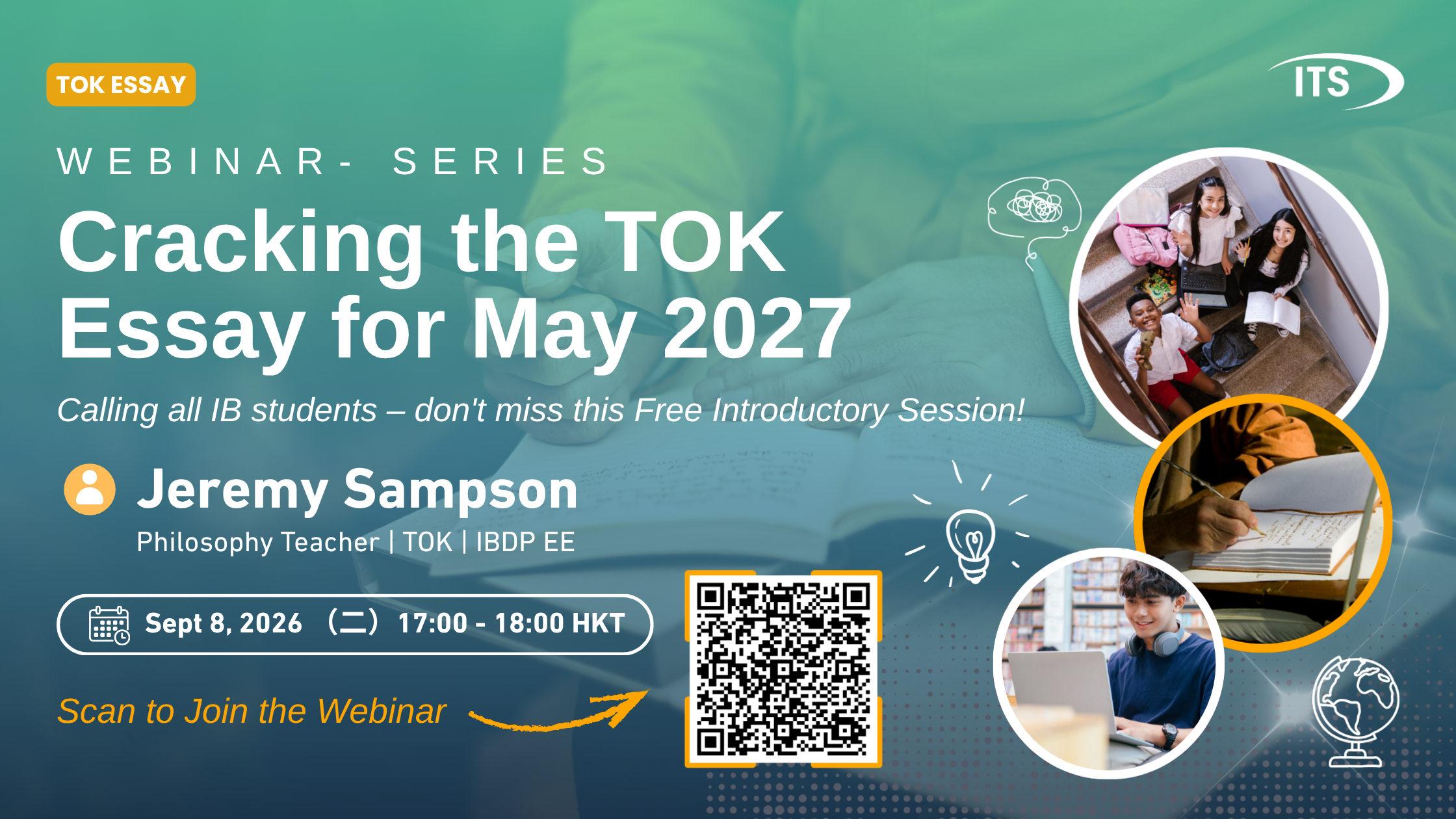
Calling all IB students – don't miss this Free Introductory Session!
系列講座—— IBDP 高分指南:TOK 寫作深度拆解