

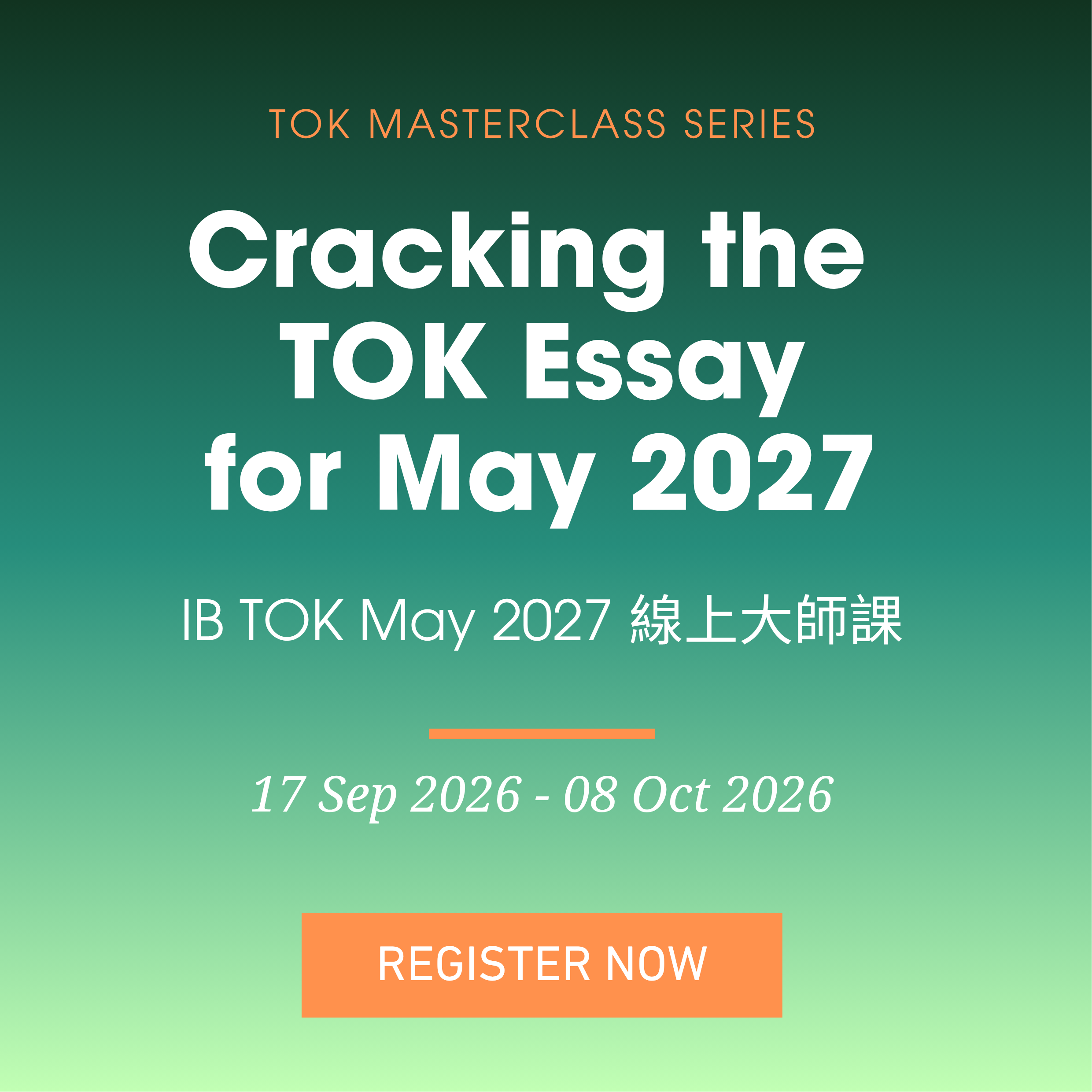
Calling all IB students – don't miss this Free Introductory Session!
- Tue, 8 Sep 2026
- 17:00 – 18:00 HKT
- Online via Zoom
系列講座—— IBDP 高分指南:TOK 寫作深度拆解
- 2026年9月8日(星期二)
- 17:00 – 18:00 HKT
- Zoom 會議


Image generated courtesy Microsoft Copilot
Test-optional admissions were introduced with the promise of fairness, equity, and an attempt at levelling the playing field, yet the policy has produced a strange environment in which the SAT has not disappeared so much as it has been repositioned. Forgetting the many, many schools who have totally abandoned the idea as absurd, some schools insist that applicants are free to withhold scores without consequence, though the behaviour of admissions committees tells a seriously more complicated story. The moment the test ceased to be compulsory, it acquired a new interpretive weight: a submitted score now functions as a deliberate signal rather than a bureaucratic requirement, and signals are precisely what admissions officers rely on when confronted with thousands of applicants who appear, at least superficially, indistinguishable.
The modern application file is saturated with all sorts of ambiguities. Grades are inflated across entire districts, course titles have become opaque, extracurriculars are curated to the point of insanity, and essays are often the product of multiple adult hands. Even recommendation letters, once a reliable source of differentiation, have settled into a predictable register of praise. In this landscape, the SAT offers something that the rest of the dossier struggles to provide: a stable, nationally normed measure that does not depend on institutional context or narrative framing. A strong score does not merely confirm academic readiness; it clarifies it in a way that transcripts and personal statements cannot.
This clarity becomes especially valuable in fields where the volume of high?achieving applicants totally overwhelms the capacity of committees to distinguish among them. Engineering, computer science, business, and economics programmes routinely receive applications from students whose academic records are nearly interchangeable, especially in this part of the world. In such cases, a high SAT score does not operate as a decorative flourish but as a decisive piece of evidence. It reassures the reader that the applicant can manage quantitative rigor without requiring them to infer it from course labels or inflated GPAs. Test?optional policies have not altered the intellectual expectations of these programmes; they have simply obscured them behind a veneer of flexibility.
The financial dimension reinforces the same conclusion. Many institutions continue to tie merit scholarships to SAT ranges, even when their admissions offices publicly downplay the test’s relevance. Families who assume that the SAT has lost its influence often discover, too late, that the absence of a score has quietly removed them from consideration for substantial aid. The policy may be optional, but the consequences of opting out are not evenly distributed.
Recent admissions cycles have made the pattern unmistakable. Applicants who submit scores are admitted at higher rates than those who do not, not because universities penalise test?optional candidates, but because score?submitters provide a more complete evidentiary record. In a process defined by scarcity, committees gravitate toward applications that reduce uncertainty. A strong SAT score eliminates doubt, and doubt is often the decisive factor in a competitive reading.
The SAT’s role has therefore evolved rather than diminished. It has become a strategic instrument, one that applicants can deploy when it strengthens their profile and withhold when it does not. Submitting a strong score communicates ambition, discipline, and academic maturity. It demonstrates a willingness to engage with a challenge that no longer carries the force of requirement. In an era when applications are increasingly polished and increasingly homogeneous, that willingness carries interpretive weight.
Test?optional policies were designed to relieve pressure, yet they have created a subtler form of pressure: the need to decide whether withholding a score will be interpreted as a gap in evidence. For applicants targeting selective universities, the answer grows clearer each year. The SAT may be optional in policy language, but in practice it remains one of the few mechanisms through which an applicant can rise above the noise of a crowded field. The test did not vanish; it simply shifted from obligation to opportunity, and opportunities, in competitive admissions, are rarely ignored.
In this environment, the role of preparation has become equally strategic. At ITS Education Asia, we have built a state?of?the?art platform engineered specifically for the all-new Digital SAT, supported by the most experienced SAT faculty in Hong Kong. Our system replicates the adaptive mechanics, timing architecture, and cognitive demands of the real exam, allowing students to train under conditions that admissions officers now treat as meaningful evidence of readiness. We do not simply teach test-taking; we cultivate performance. In a landscape where a strong score functions as a rare, clarifying signal, access to a purpose?designed digital training environment—and to instructors who have spent decades maximising SAT outcomes—has become a decisive advantage rather than an optional supplement.






Calling all IB students – don't miss this Free Introductory Session!
系列講座—— IBDP 高分指南:TOK 寫作深度拆解