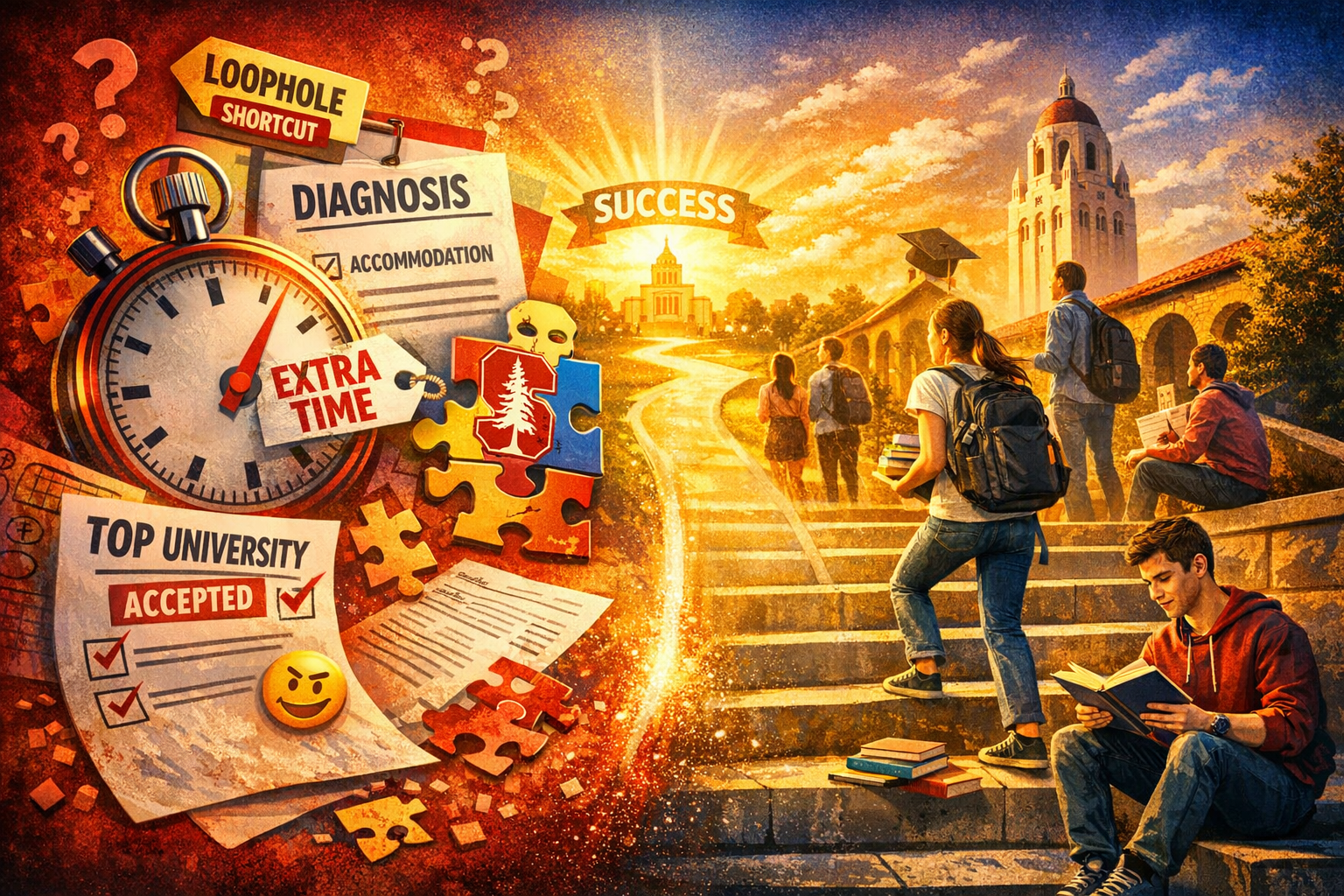
Image AI generated by Microsoft Copilot
Recently I read an article in Fortune reporting that nearly 40 percent of Stanford undergrads claim some form of disability, meaning (I assume) they received extra time on their exams, SATs, or had some kind of accommodation that may have factored into their chances of admission. While this type of thing has been on the upward trend for years (and some of my students have openly admitted to ‘faking it), what struck me most was not the number itself but what it reveals about the pressures families are under to navigate the academic pathways to greatness, especially trying to enter ‘unobtanium’ schools with sub-5% acceptance rates.
In this part of the world, families often interpret these numbers through the lens of advantage, imagining that a diagnosis or accommodation might somehow smooth the road to a top university. It should be widely understood that disability accommodations are not and should not be an admissions strategy. They are a rights?based support system that begins only after a student has already earned their place. The misunderstanding itself is a symptom of a deeper issue: families are navigating a system they were never taught to understand, and students are absorbing pressure long before they ever set foot on a university campus.
When I work with families, I see how easily these misconceptions take root. Many parents assume that accommodations translate into preferential treatment, or that extra time on exams is a kind of academic boost. Accommodation is designed to level the playing field, not tilt it. They are not shortcuts, nor are they tools to ‘game’ a system. The fact that so many Stanford students report disabilities reflects something else entirely: the intensity of elite academic environments, the normalization of seeking support, and the growing awareness of mental health and learning differences among high?achieving young adults. Students at this level are not looking for loopholes; they are trying to survive and succeed in environments that demand extraordinary stamina.
This is where early preparation matters far more than any label. The students who thrive—both in the admissions process and once they arrive at university—are the ones who have developed resilience, self?awareness, and a grounded understanding of their own learning profile. They know how to manage pressure without collapsing into crisis. They know when to ask for help and when to push themselves. They understand their strengths well enough to build a coherent academic story, rather than scrambling to assemble one in the final months before applications are due. These qualities cannot be manufactured through diagnoses or last?minute interventions; they are cultivated over years through intentional guidance and honest reflection.
For international families, this is often the missing piece. Many students grow up in systems that reward compliance, perfection, and silence rather than self?advocacy, adaptability, and reflective thinking. When they enter the US admissions landscape, they suddenly encounter a system that values narrative, authenticity, and personal insight—qualities that cannot be faked and cannot be outsourced. The healthiest advantage a student can have is not a documented condition but a clear sense of who they are and how they learn. My role is to help families build that foundation early, long before the pressure peaks, so students feel equipped rather than overwhelmed.
The Stanford number isn’t a warning about students seeking unfair advantage; it is a reminder that the path to elite universities has become emotionally and academically demanding in ways that families often underestimate. Instead of chasing labels or shortcuts, the more sustainable path is to invest in preparation that builds confidence, clarity, and resilience. When students understand themselves deeply and develop the habits that support genuine growth, they do not need to rely on last?minute fixes or misunderstood strategies. They enter university ready to thrive on their own terms.
At ITS Education Asia, this is exactly where our admissions team steps in—not to add pressure or chase artificial advantages, but to remove confusion, build genuine readiness, and guide families with clarity. Our work is grounded in expertise, ethics, and long-term student development. We help students articulate who they are, strengthen the habits that matter, and navigate the admissions landscape with confidence rather than fear. In a system often misunderstood and overwhelming, having experienced educators in your corner is not a loophole—it is a natural, sustainable advantage that empowers students to thrive on their own merit.