

Join us to explore the Netherlands, Germany, Switzerland, Spain, Italy, and more
- • Tue, 25 Aug 2026
- • 19:00 – 20:00 HKT
- • Online via Zoom
歐洲學位何以正悄然成為美、英、澳以外之一條更明智路徑。本次講座帶您一次看懂荷蘭、德國、瑞士、西班牙、義大利等國。歡迎預約。
- • 2026年8月25日(星期二)
- • 19:00 – 20:00 HKT
- • Zoom 會議

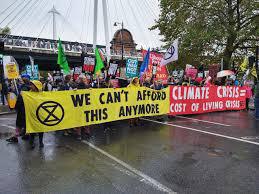
In contrast to most people’s banal and hyper-predictable NY resolutions, Extinction Rebellion (XR) announced “a controversial resolution to temporarily shift away from public disruption as a primary tactic”. Meanwhile, Insulate Britain and Just Stop Oil have explicitly vowed to continue disruptive practices and will continue to see members get sent to prison. This is an interesting case study in both the nature of protest and its cycles.
Perhaps one of the most interesting considerations is the cultural milieu from which protest arises. This will determine how far people pushed before they protest, how widespread it will be, how much popular support it will have. There is something of a chicken and egg relationship between these elements and the nature of the protest itself – march, print, riot, damage, disruption and so on.
Environmental activists have certainly gone through a variety of approaches over the years. Which then raises the question of whether there is any impact at all, regardless of its nature.
Perhaps the main purpose and/or outcome of protest is to assuage the guilt of those who feel guilty if they do nothing.







Join us to explore the Netherlands, Germany, Switzerland, Spain, Italy, and more
歐洲學位何以正悄然成為美、英、澳以外之一條更明智路徑。本次講座帶您一次看懂荷蘭、德國、瑞士、西班牙、義大利等國。歡迎預約。