

Calling all IB students – don't miss this Free Introductory Session!
- Tue, 8 Sep 2026
- 17:00 – 18:00 HKT
- Online via Zoom
系列講座—— IBDP 高分指南:TOK 寫作深度拆解
- 2026年9月8日(星期二)
- 17:00 – 18:00 HKT
- Zoom 會議

A B C D E F G H I J K L M N O P Q R S T U V W X Y Z
Taiga -the Russian term for boreal.
Talik -unfrozen ground in an area of permafrost.
Talus -the accumulation of weathered material on a slope.
Tariff -a duty or tax placed on imports as part of protectionist policy.
Tectonic- The geological processes by which rocks are deformed and that produces features of the earth's crust.
Temperate -moderate or mild conditions as found between 23.5˚ and 66.5˚ of latitude.
Temperate deciduous forest -forest that dominates in temperate areas. Trees are deciduous i.e. they shed all their leaves during the winter season (or during drier periods).
Temperate glacier -a glacier in which the ice reaches the pressure melting point.
Temperate grasslands -extensive natural grasslands in the continental interiors of temperate regions.
Temperature inversion -a situation where temperature of air in the lower troposphere increases with height.
Temperature range -the difference between maximum and minimum temperature. Can be measured over different timescales, and for absolute readings or averages.
Tenure -the conditions of occupancy of a piece of land.
Tephra -see pyroclastic cloud.
Terminal moraine - are ridges of unconsolidated debris deposited at the snout or end of the glacier.
Terrace -an area of flat ground set into or onto a steep slope.
Terra rossa -a soil found on limestone where silicates have leached out leaving oxidized iron-rich deposits which give the soil a distinctive red colour, hence the class="d-title" name.
Tertiary -a period of geologic time lasting from 65m to 1.6m years ago.
Tertiary sector -those industries providing services, both private and public.
Thalweg - the deepest part of the river channel.
Thermokarst -in periglacial areas, the melting of ground ice causes subsidence and creates a very uneven surface.
Thermosphere -the upper layer of the atmosphere above 80km from the earth surface. Extremely hot (up to 1200˚C) due to absorption of radiation by gases.
The South - see economically less developed countries.
Third World - see economically less developed countries.
Third World debt -the huge sums of money owed by ELDCs to EMDCs, banks and institutions such as the IMF. Often debts become so huge that the country may struggle even to pay the interest.
Threshold -in human geography, the minimum number of people required to support a good or service. In physical geography, the shallow area at the mouth of a fjord.
Threshold velocity - the velocity required for particles of a certain size to be taken into transport by an agent of erosion (entrainment).
Throughfall - precipitation falling through the vegetation cover to the surface. It is slowed by collisions with leaves and branches but does not get fully intercepted by them.
Throughflow -the movement of water through a soil to a river channel.
Tidal energy -the energy involved in tidal movements of water which is available to be harnessed if those movements can be used to turn turbines.
Tidal flat -the surface exposed only at low tide.
Tidal range -the difference in height between low tide and high tide.
Tidal zone -the area between the low water mark and the high water mark.
Tide -the periodic rise and fall of sea level due to the gravitational pull of the sun and moon. The tidal range will be determined by the relative positions of these two bodies which can work with or against each other.
Till -glacial deposits.
Tombolo -a sand deposit which joins an island with a nearby land mass.
Topographical map -a map of surface feature, natural and human, drawn to scale.
Topological map -a map which uses points and straight lines to show relative positions and linkages e.g. one showing a rail network.
Topset beds -layers of sediment at the landward side of a delta.
Tor -blocks of granite which appear balanced on one another.
Tornado -a localized, anti-clockwise spiral of wind with extremely violent wind speed and uplift.
Toxic waste -poisonous by-products of industrial processes which use metals. May be solid, liquid or gaseous.
Traction -the rolling of load along the bed of a river channel.
Trade bloc -a collection of countries who agree to make trade between themselves easier and to maintain barriers to trade with countries outside of the bloc.
Trade winds -easterly winds which blow from the tropics towards the equator. So class="d-title" named as they were first identified by sailors who used them to cross the Atlantic.
Transect -a line drawn between points and then used to investigate changes in surface features along that line.
Transhipment -the transfer of cargo between ships or between two different modes of transport.
Translocation -the movement of soil components within the soil.
Transmigration -the mass resettlement of people within a country to alleviate overcrowding or localized overpopulation.
Transpiration -the loss of water from plants through the stomata in the leaves.
Transport -two types:
In human geography, the
movement of goods or people by vehicle
In physical geography, the
movement of sediment load by water, wind or ice.
Transnational corporation -one which operates in more than one country. Traditionally, high value operations such as headquarters, research and marketing located in EMDCs while manufacturing took place in ELDCs.
Trellised drainage pattern -where the pattern of streams is such that the tributaries (or subsequent streams) to the main (or consequent stream) join at right-angles to it. The pattern may become more complex with the addition of obsequent streams. The pattern develops on areas of alternate bands of resistant and less resistant rock.
Triassic -a period of geologic time lasting from 245m to 208m years ago.
Tributary -one river joining another. Usually the smaller of the two is labelled the tributary, and the larger is the main channel.
Tricellular model -the basis of the modern understanding of the general circulation of the atmosphere as it relates to the troposphere. Air rises at the equator due to convection and is forced to move to higher latitudes when it reaches the tropopause. Having cooled it sinks over the tropics and drags down air adjacent to it. On reaching the surface, the air is again forced to split; some returning to the equator and some moving to the mid-latitudes. This warmed air meets cold polar air at about 60-of latitude and is forced to rise, again splitting at the tropopause; some returning to the tropics and some moving over the poles. This circulation forms three cells known as the Hadley, Ferrel and Polar respectively.
Trickle down -the movement of wealth from a core region into the periphery.
Trophic level -in ecosystems, each level of energy storage which is also a food supply for the next.
Tropic -a line of latitude marking the most northerly and most southerly overhead paths of the sun. On June 21st the track is in the north and is marked by the Tropic of Cancer. On December 21st the track is in the south and is marked by the Tropic of Capricorn.
Tropical -of the tropics, commonly relating to areas between them.
Tropical cyclone -a severe low pressure weather system which develops over tropical maritime areas. A steep pressure gradient and the central uplift draws in high speed winds which spiral towards the central area. Uplift causes cooling to the dew point, releasing latent heat and maintaining the uplift, drawing in fresh winds. Brings heavy rainfall to coastal areas. At the end of summer, can develop into larger, more severe systems such as typhoons and hurricanes.
Tropical rainforest - a forest biome located approximately 5˚N and S of the equator. Characterized by high annual rainfall >2000mm and high average annual temperature >25˚C. Thus, along with the vegetation being evergreen, it has the highest rate of net primary productivity of any biome.
More here: http://www.globalchange.umich.edu/globalchange1/current/lectures/kling/rainforest/rainforest.html
Tropopause -a narrow layer of the atmosphere between the troposphere and the stratosphere. Varies between altitudes of 8km above the poles to 16km above the equator. Marks the limit of weather.
Troposphere -lower layer of the atmosphere, from the surface to the tropopause. Contains over 50% of the air and is where all weather takes place.
Trough - 1)
In geology, a trough generally
refers to a linear structural depression that extends
laterally over a distance, while being less steep than a
trench. 2) In
metrology, an elongated region of relatively low atmospheric
pressure, often associated with fronts.
Truncated spur -steep cliff face at the side of a glacial trough where a valley glacier has removed an interlocking spur. The glacier is unable to follow the winding course of the original river and ulldozes-straight through.
Tsunami -a large wave, or series of waves, caused when an earthquake causes massive undersea crust movements and/or collapses which displace the water above.
Tundra -the biome found in the Arctic circle across North America, Greenland and Europe. Winters are long and cold and in summer the daytime temperature rarely exceeds 5˚C. Precipitation is low and mostly falls as snow. Vegetation is mostly grasses, mosses and lichens with occasional small trees in more sheltered areas.
Turbine -a rotary motor driven by a flow of water, steam or wind to produce electrical energy.
Turbidity -the measure of suspended sediment maintained in water by turbulent flow.
Twilight zone -in Burgess model of urban land use, the second zone, surrounding the CBD characterized by old factories and slum areas which may be in transition and experiencing some regeneration.
Typhoon -a tropical cyclone forming in the western Pacific/South China Sea and posing a hazard to SE and East Asia.
A B C D E F G H I J K L M N O P Q R S T U V W X Y Z
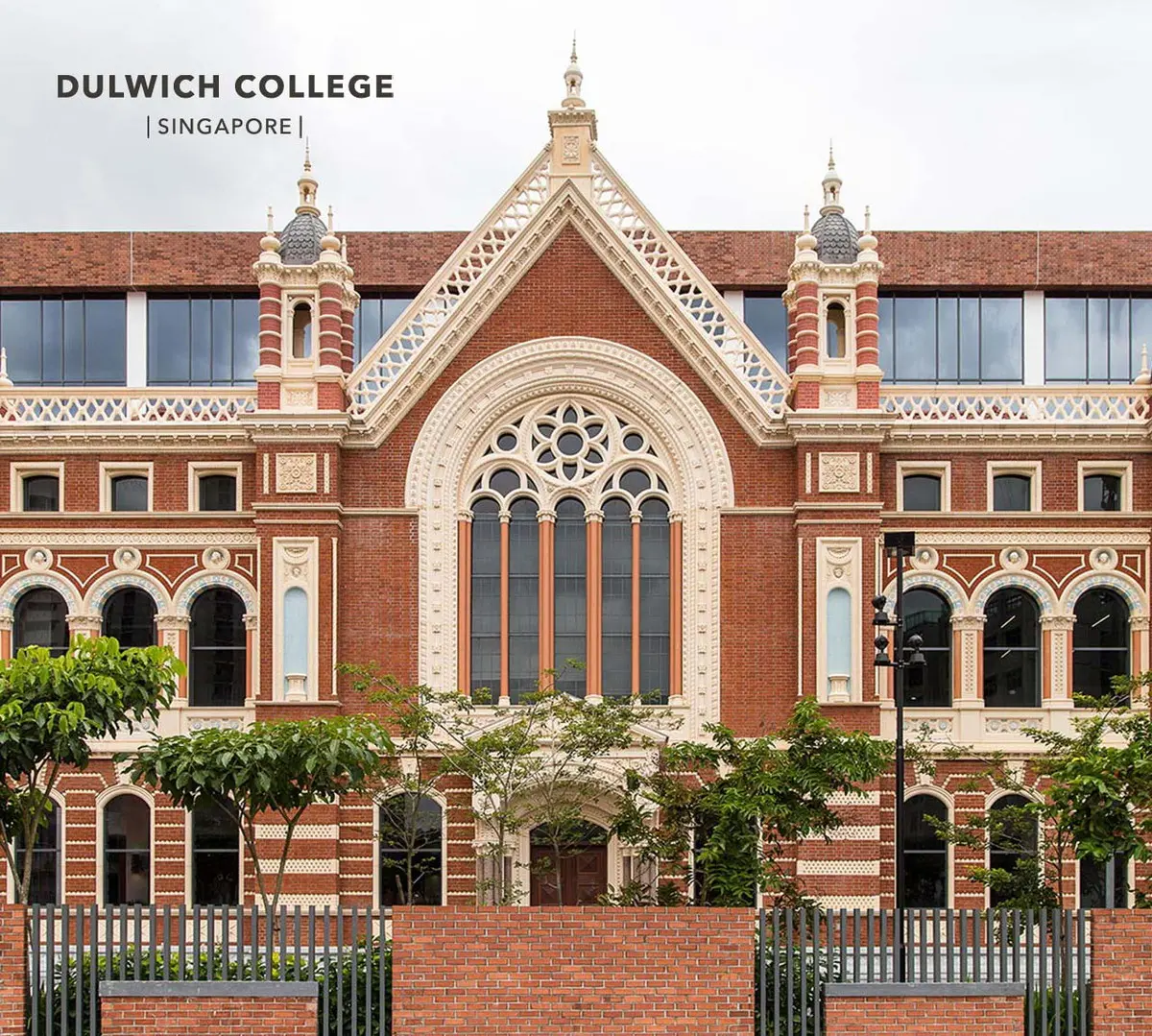







Calling all IB students – don't miss this Free Introductory Session!
系列講座—— IBDP 高分指南:TOK 寫作深度拆解